

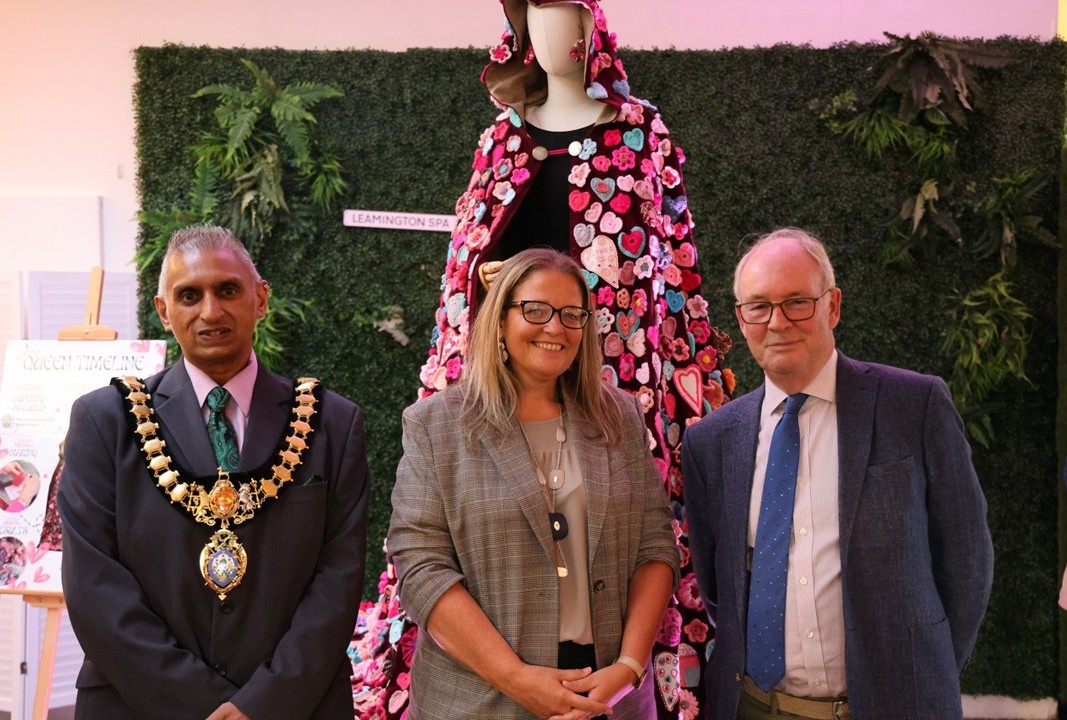
A spectacular community art project which brought together the collaborative creative efforts of vulnerable women across the region, was unveiled for the first time at a special event in Leamington. (September 4th)
Called ‘Queen,’ the impressive patchwork is made up of more than 1,000 hand-stitched hearts and flowers and took over six months to complete.
The seven-metre hooded cape, is the initiative of The Esther Project, a Leamington-based CiC dedicated to supporting vulnerable women, including those dealing with mental health challenges, escaping domestic abuse, overcoming addiction, transitioning from prison or facing homelessness.
It was completed with the backing of Leamington Town Council’s Community Grant Fund, established to support Community and Voluntary groups with projects that are of benefit to the wider Leamington Spa community.
Lisa Nicolle, spokesperson for The Esther Project, said: “The Queen project exemplifies how craft and creativity can empower individuals, while building links with the wider community. It brings together women from diverse backgrounds, fostering a sense of belonging and breaking down barriers between age groups, skill levels and social experience.
“Each stitch carries a story – of courage after hardship, of rebuilding confidence, of daring to dream of a new future. Piece by piece, these individual creations have been joined together to form a spectacular cape fit for a queen.
“It is more than an artwork – it is a powerful symbol of what is possible when women stand together, support one another, and believe in themselves again. The project brings women together in a supportive and collaborative setting, reducing feelings of isolation.”
She added: “Craft activities like crochet and patchwork promote relaxation and offer mental health benefits and participants gain a sense of pride and accomplishment by contributing to a visible and meaningful art installation. A group activity like this also fosters social bonds, which are crucial for mental health, as well as encouraging self-confidence, teaching planning, coordination, and project execution skills.”

The Esther Project was established by Lianne Kirkman in 2023 – her mission, to create a nurturing and empowering community where every woman can heal, grow and reach their future potential. It does this through a range of services, including counselling, one-on-one support, creative activities, employability opportunities, and drop-in sessions.
Esther House – a seven-bed supported living accommodation, opens its doors for vulnerable women who need a safe space to recover.
Many of the ladies who attend The Esther Project’s weekly support groups also had a hand in creating the designs which were then meticulously sewn onto the cape over several weeks by a team of hardworking volunteers, overseen by Judith Perry.

Judith said: “The ladies have made various contributions involving learning new skills – not only crochet, but also papier mâché, fabric painting and beading, all of which adorn the cape. And many different organisations and individuals were involved in making the hearts and flowers, including local WI groups and members of Leamington Studio Artists.”
Specially invited guests, including the mayor and Warwickshire Police Crime Commissioner, Philip Seccombe, gathered to witness The Queen’s grand unveiling at The Riverside Glasshouse in Jephson Gardens on Thursday, ahead of its tour of other locations in the town.
Mr Seccombe said: “The Esther Project is doing fantastic work and Lianne is one in a million. I know it will continue to grow and the cape is incredible.
“One of the main themes of my real time plan is to put more and more into prevention of reoffending and this is one of the projects that’s making a difference.”
Leamington Mayor Councillor Ruggy Singh said: “It’s not very often we have the opportunity to come back and hear about the fantastic work that has taken place as a result of our community funding. It’s a wonderful cause, creating a space where women can come together, find support and be part of a community that helps them through life’s hardest challenges. I would like to thank you for the amazing work you continue to do. The difference you make to those who need it most is truly invaluable.”
The cape is also on display at The Autumn Market at The Pump Rooms this weekend (September 6th-7th) as well as The Esther Project’s Fundraising Dinner on February 7th at Kings High School, in Warwick.
Further information about the work of The Esther Project can be found HERE. Donations can be made via HERE.

Why Does The Esther Project Exist?
While women are often less visible on the streets rough sleeping, they actually make up 60% of those who are homeless and in temporary accommodation. In the last 10 years, the number of women in England who are homeless has increased by 88%. The evidence from the latest census, conducted across 41 local authorities, estimates there may be up to nine times as many women rough sleeping across England than the government’s annual rough sleeping snapshot suggests.
Globally, women are disproportionately affected by poverty, discrimination, inter-personal violence and exploitation. Women have fewer economic assets than men and limited participation in influencing economic and social policies. Women also perform the bulk of childcare and household work and have less access to education and economic opportunities than men in their societies (UN Women, n.d.). Despite some important increases in women’s equality in the 20th Century it is still the case that women in Britain are likely to:
- Earn less money than men
• Undertake certain kinds of paid work (e.g. lower paid, personal services)
• Enjoy less progression at work
• Have less freedom and leisure than men
• Spend more time looking after people
For some women and girls these structural factors, combined with gendered life experiences, such as being a victim of violence, lead to extremely difficult lives. Women may be dealing with multiple issues at any one time, such as:
- Homelessness
• Involvement in prostitution or sexual exploitation
• Mental health problems
• Domestic violence
• Drug and alcohol problems
• Contact with the criminal justice system


